
Don't let termites eat your most precious investment
Termites cause billions of dollars in structural damage every year — and most of it isn't covered by home insurance. Our certified technicians find them fast and eliminate them completely.
Usually not insured
by standard home insurance
250M+
Years termites have existed
Millions
Termites in a mature colony
24/7
Feeding, every day of the year
2–5 yrs
Typical time active before damage shows
What Are Termites?
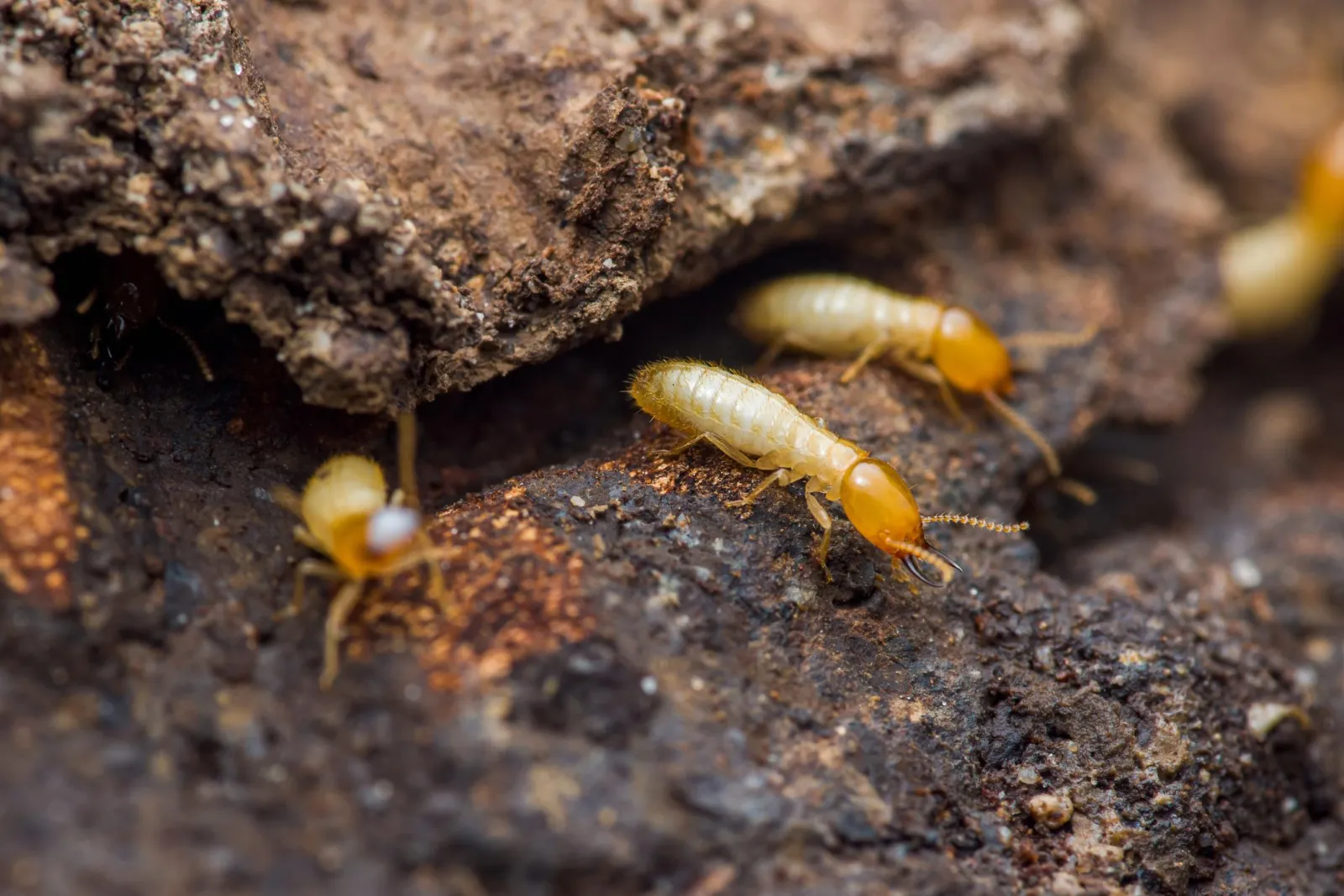
Termites are small, social insects that have existed for over 250 million years — long before humans began building with timber. They live in highly organised colonies that can range from a few thousand individuals to several million, and they operate around the clock, every day of the year. That relentlessness is what makes them so damaging.
Their primary food source is cellulose, found in wood, paper, cardboard, and plant matter. In nature, termites play a genuinely important role — breaking down dead trees and returning nutrients to the soil. The problem is that they can't distinguish between a fallen log in the bush and the structural beams of your home.
Why they go undetected for years
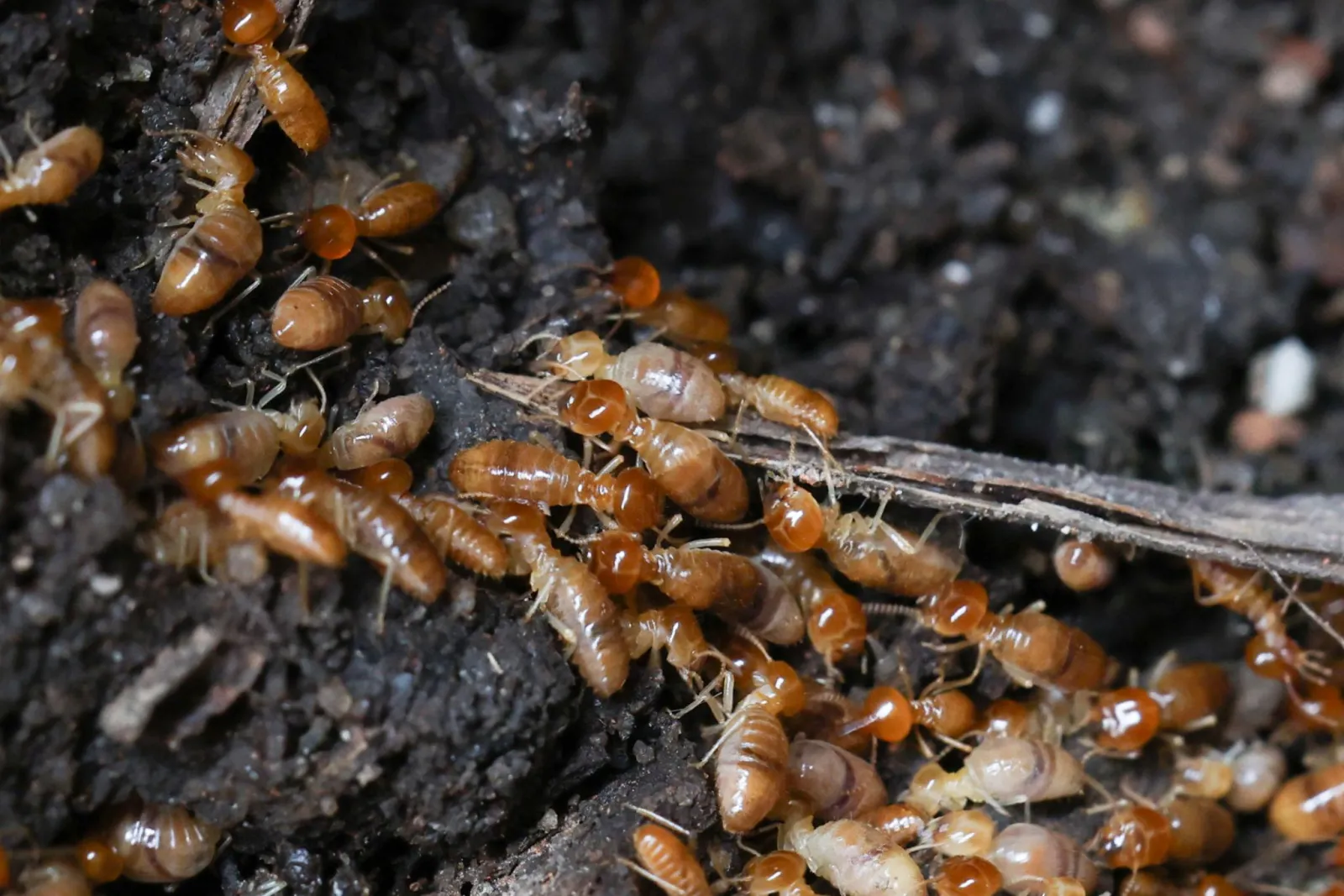
Unlike a rodent infestation or a wasp nest, there are rarely obvious early signs. Termites work from the inside out, hollowing out timber while leaving the outer surface intact. A beam can look perfectly solid while being almost entirely consumed within. By the time damage becomes visible — warped floors, crumbling skirting boards, sagging ceilings — a colony may have been active on your property for two to five years.
How Termite Colonies Work
Like ants and bees, termites are eusocial insects with a rigid caste structure. Each colony is made up of:
Workers
The most numerous caste, and the ones causing the damage. They forage constantly, feeding on timber and carrying food back to the colony.
Soldiers
Responsible for defending the colony against predators such as ants. They have enlarged heads and powerful jaws but cannot feed themselves.
Reproductives
The queen, king, and winged alates (swarmers). The queen can live for decades and lay thousands of eggs per day. Mature colonies release alates to start new colonies nearby — often the first visible sign homeowners notice.
The Main Termite Species
Not all termites behave the same way, and knowing which species you're dealing with matters for treatment.
Subterranean Termites
The most widespread and destructive species in Australia. They nest underground or inside large trees and travel to food through networks of mud tunnels — the distinctive brown tubes you might see along foundations or walls. The nest is often located well away from the timber they're eating.
Drywood Termites
Don't need contact with soil or a moisture source. They nest directly inside the wood they consume, making them harder to find and treat. Infestations tend to be smaller but are still capable of significant structural damage over time.
Dampwood Termites
Attracted to timber with high moisture content — often a sign of a leak or poor drainage around the property. Addressing the moisture source is an important part of any treatment plan.
Think You Might Have Termites?
Look for any of the following around your home:
Hollow-sounding timber when tapped
Mud tubes along foundations, walls, or beams
Small piles of frass (droppings) that resemble sawdust
Blistered or bubbling paint on walls
Doors and windows that suddenly stick or warp
Discarded wings near windowsills or light sources
If you've spotted any of these, don't wait — termite damage worsens quickly and quietly.
Call nowOur Termite Treatment Process
We don't just treat the symptom — we eliminate the colony.
Thorough Inspection
A detailed inspection of your subfloor, roof void, perimeter, and internal timbers — using moisture meters and thermal imaging where needed.
Tailored Treatment Plan
No two properties are the same. We recommend the right solution for your situation — a chemical barrier, baiting system, or direct timber treatment.
Colony Treatment
We target the entire colony, not just the visible termites. Our products are registered, tested, and applied safely around your family and pets.
Ongoing Protection & Reports
Monitoring programs and annual inspections keep your home protected, plus a clear written report of the service completed for your peace of mind.
Why Choose Safe Circle?
Frequently Asked Questions
Termites don't take weekends off.
Neither do we.
Call 1300 793 191 or email us for a fast, obligation-free inspection.
info@safecirclepestcontrol.com.au